During the eighteenth century, Rococo emerged in France and quickly became one of Europe's defining artistic styles. In contrast to the symmetry, grandeur, and dramatic expression of the Baroque, Rococo embraced graceful curves, flowing scrollwork, shell motifs, and abundant floral ornamentation, creating an aesthetic that was lighter, more elegant, and inspired by the beauty of nature. Its influence would continue well into the nineteenth century, shaping the decorative arts across Europe.
Founded in 1804, Choisy-le-Roi became one of France's leading porcelain and ceramics manufactories. As Meissen porcelain gained admiration throughout Europe, Choisy-le-Roi drew inspiration from the celebrated German decorative tradition, combining its characteristic floral painting with refined French craftsmanship to create porcelain that was both elegant and richly ornamented.
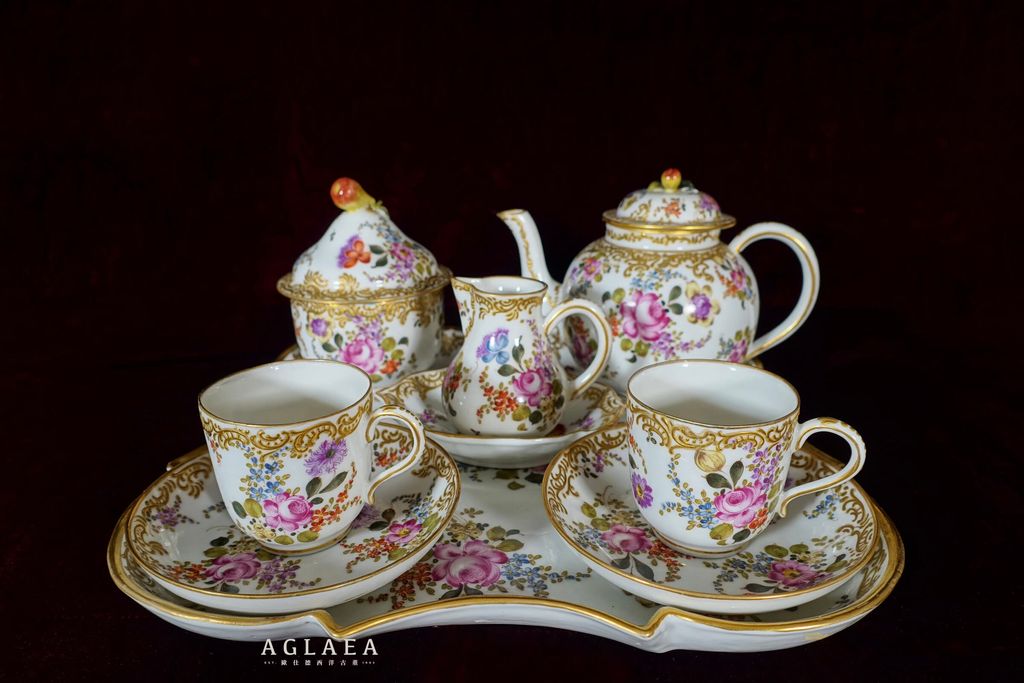
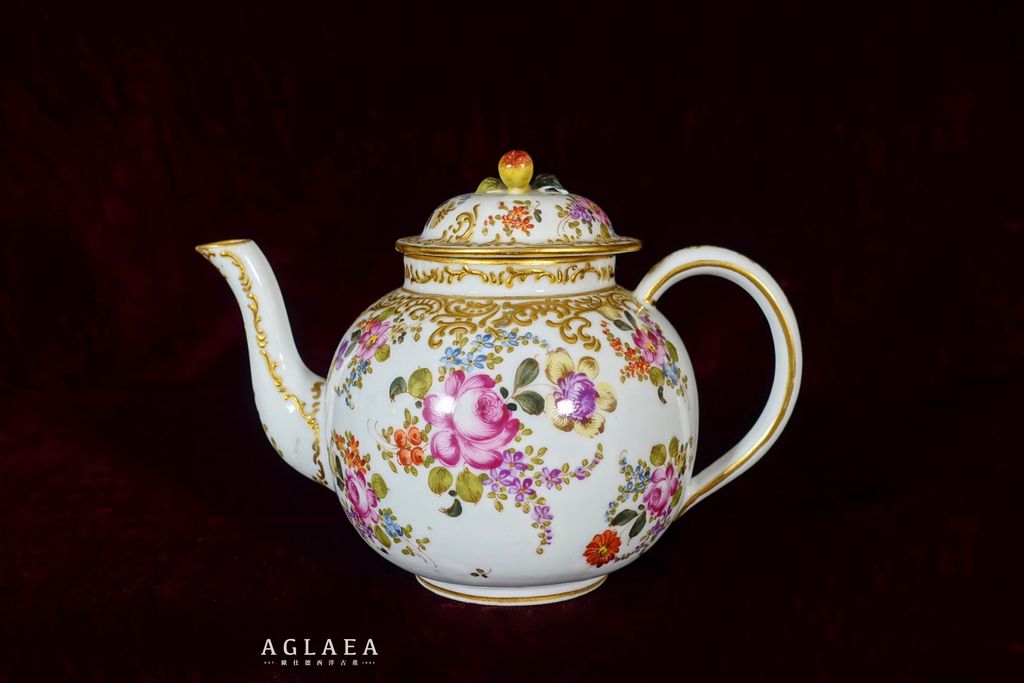
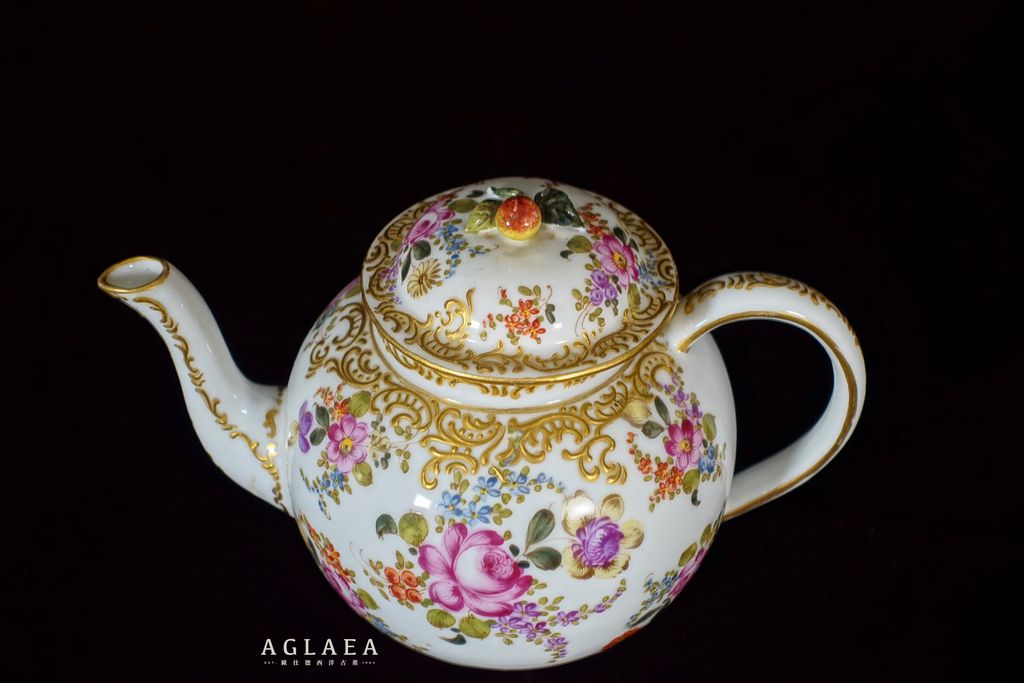
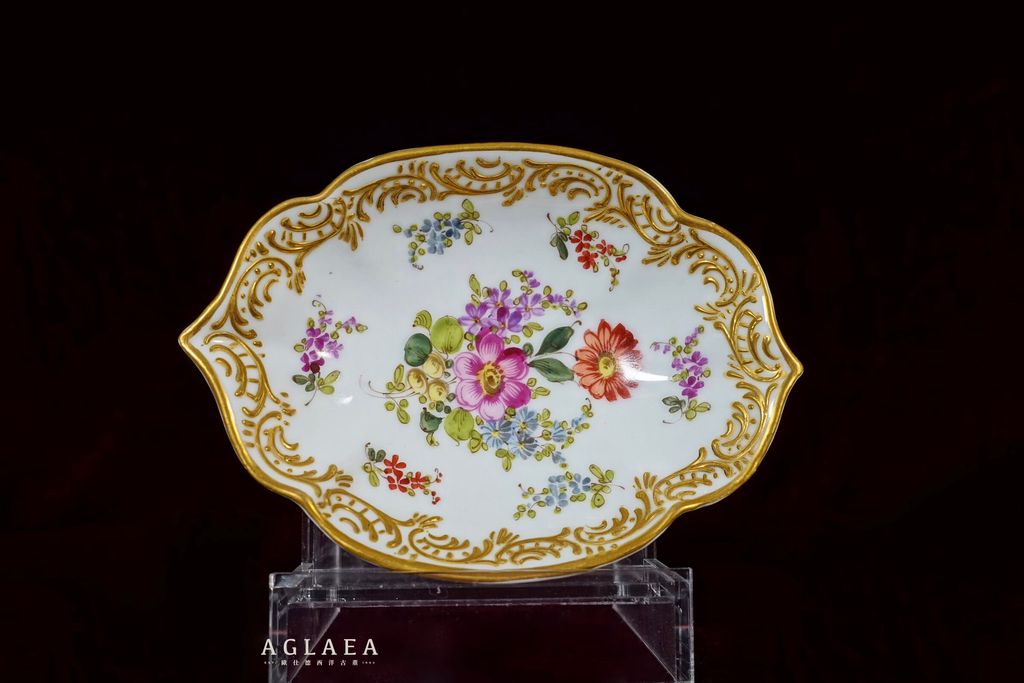
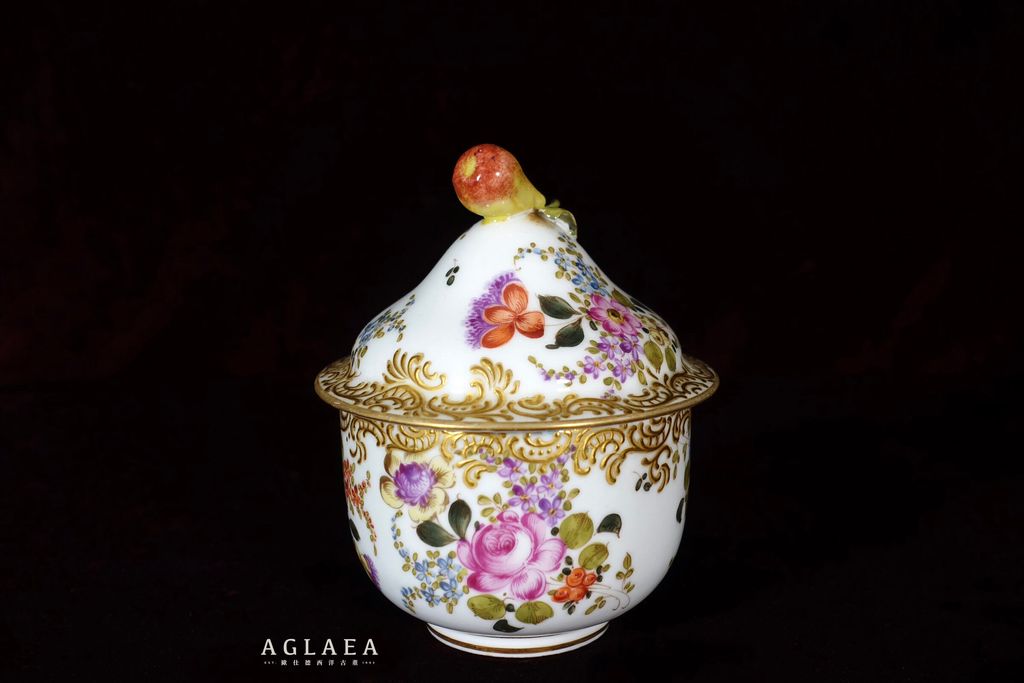
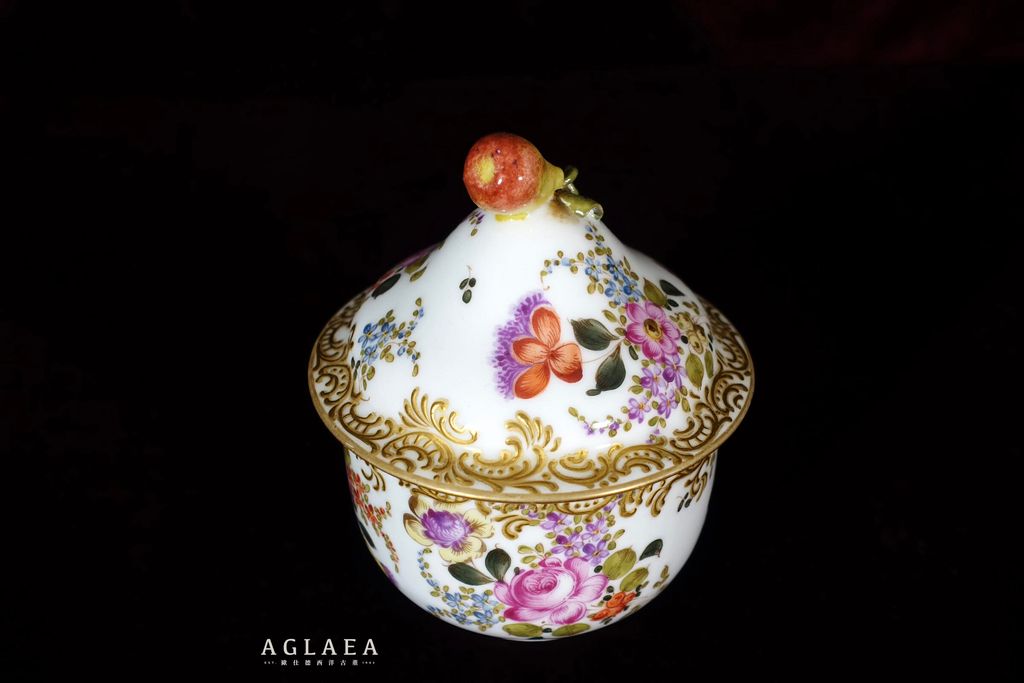
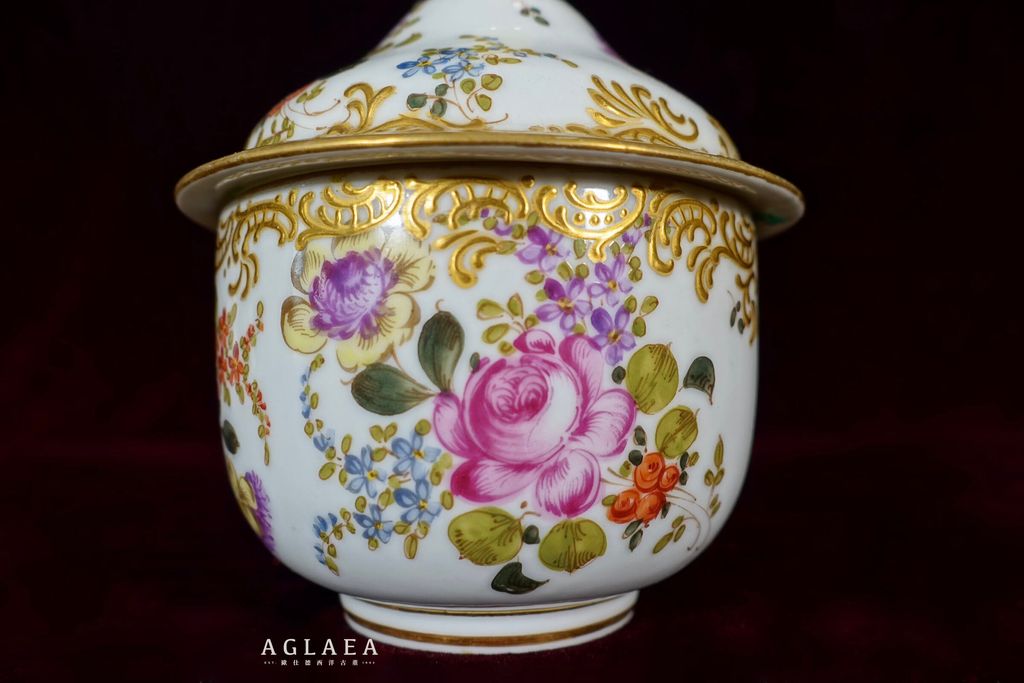
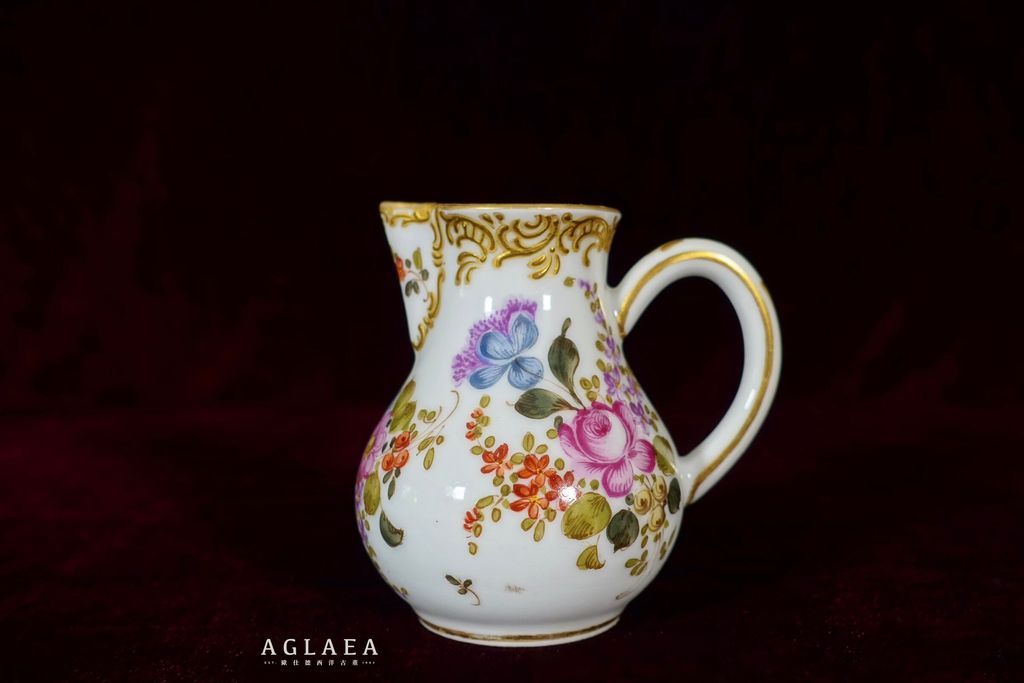
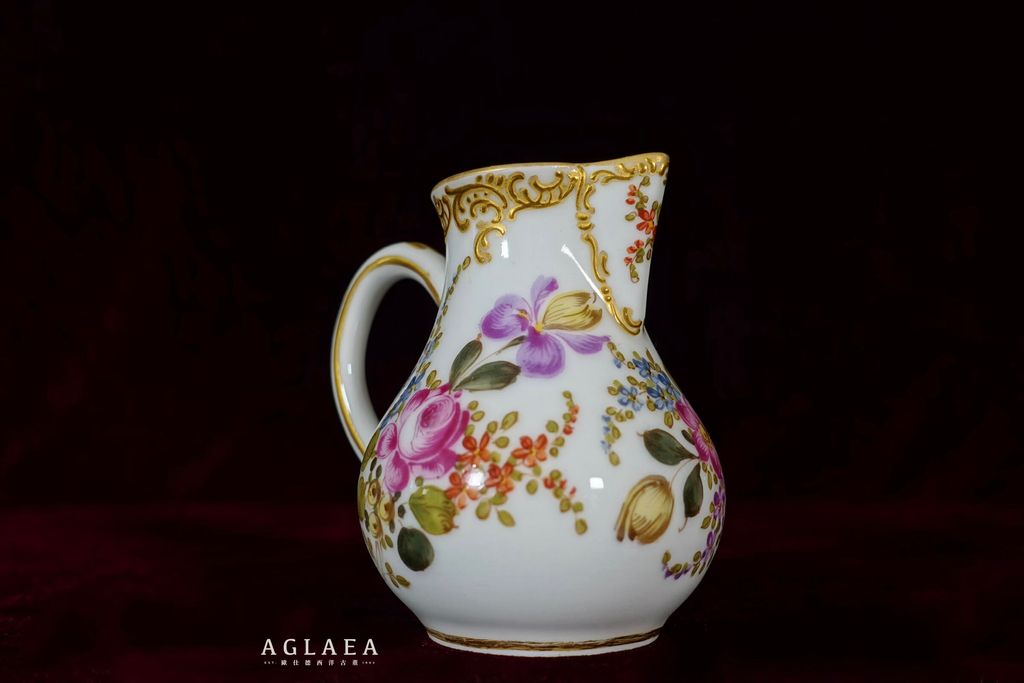
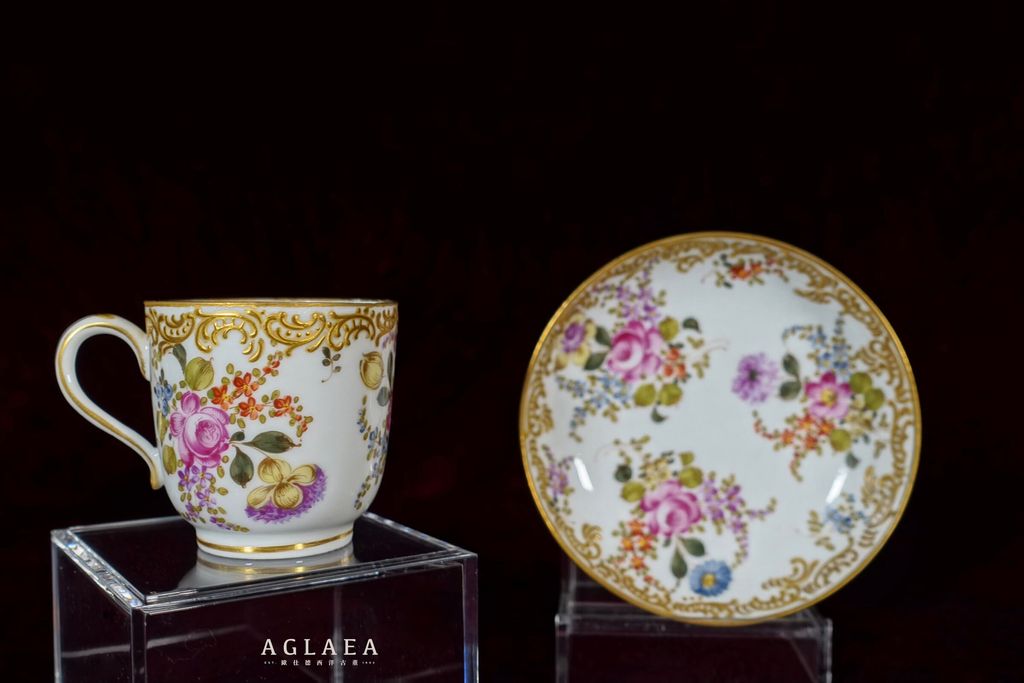
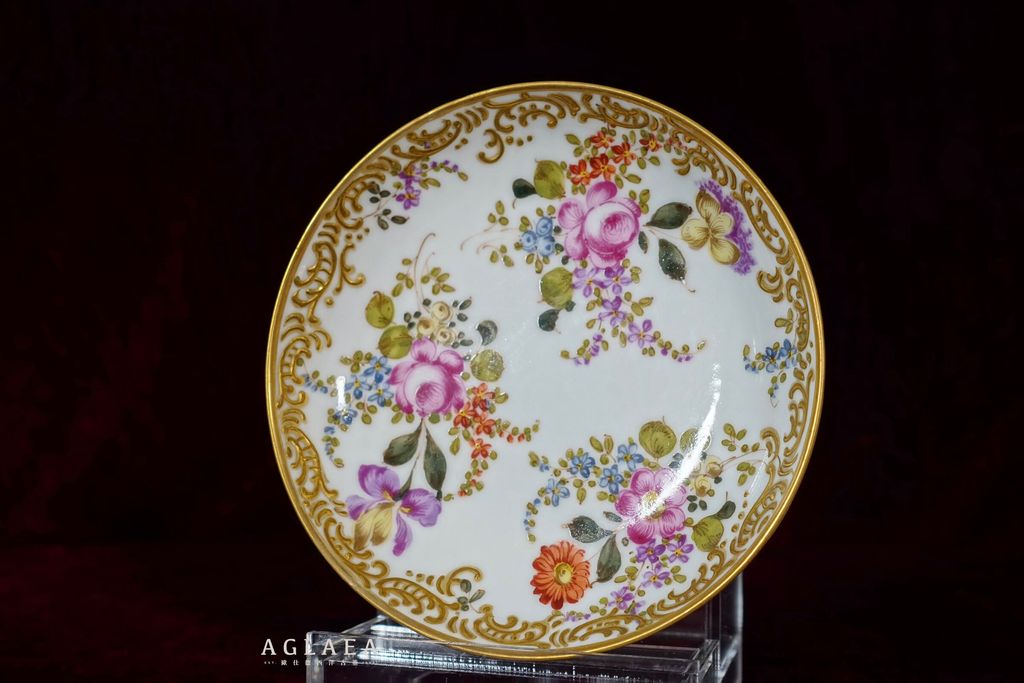
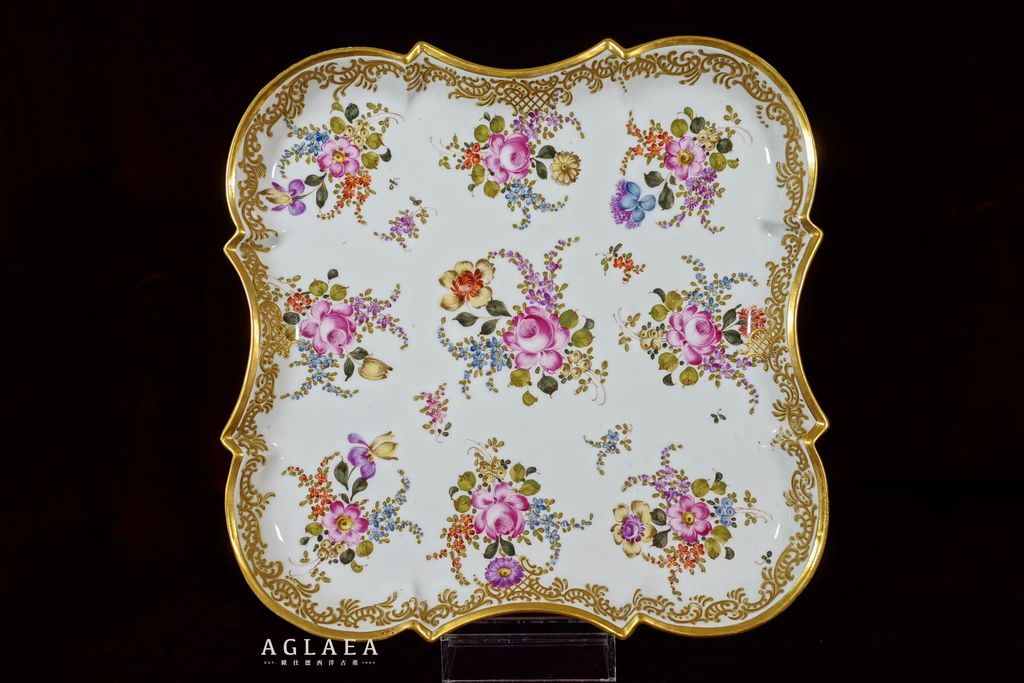
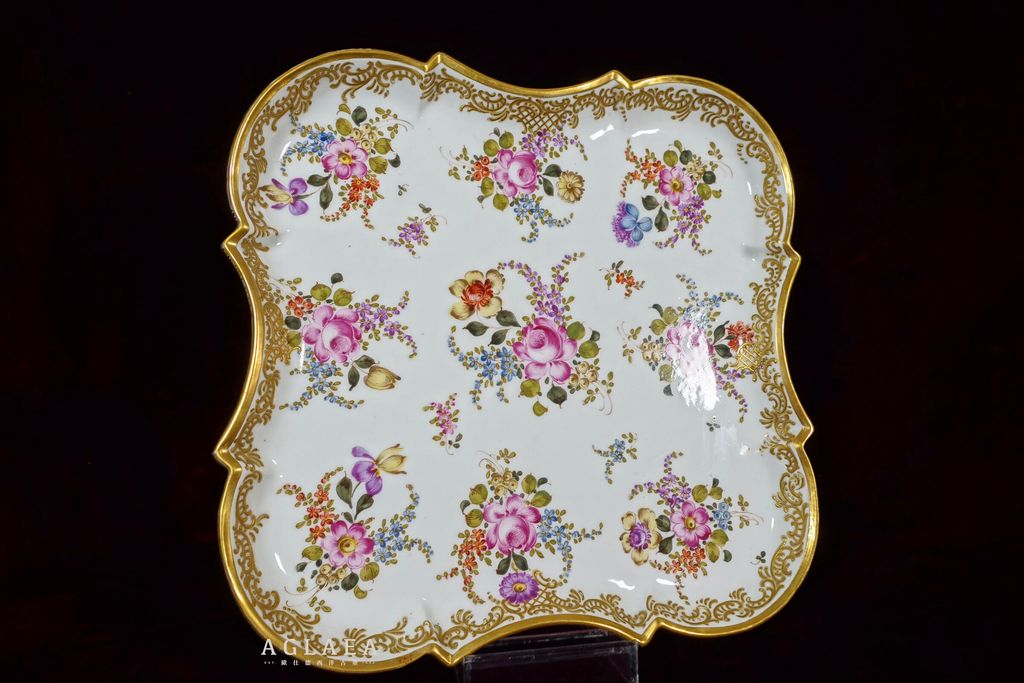
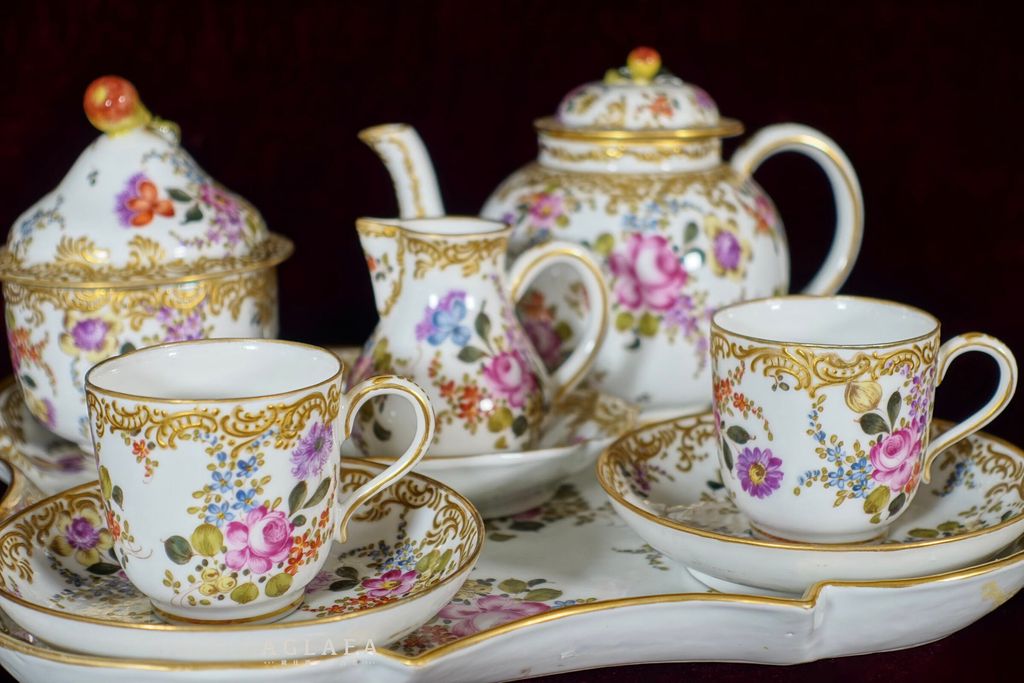
The decoration of this tea service reflects the celebrated German Floral Bouquet style that became synonymous with nineteenth-century European porcelain. Rather than depicting flowers with strict botanical accuracy, artists composed romantic bouquets of roses, cornflowers, daisies, forget-me-nots, and seasonal blossoms in natural, asymmetrical arrangements. Delicate layers of enamel create remarkable depth and softness, giving the impression of freshly gathered flowers in full bloom.
Equally remarkable is the elaborate hand-applied gilding. The rims, handles, spout, finial, and tray are enriched with finely painted Rococo scrollwork, each detail carefully executed by hand before being kiln-fired to permanently fuse the gold into the porcelain. The gilding not only enhances the elegant silhouette of each piece but also beautifully complements the floral decoration with a refined, luminous finish.
From the delicate hand-painted floral decoration and meticulous gilding to the rarity of its complete preservation, this tea service beautifully captures the artistry and craftsmanship that defined fine European porcelain in the nineteenth century.
十八世紀,洛可可(Rococo) 在法國興起,並迅速風靡歐洲宮廷。相較於巴洛克講究莊嚴、對稱與戲劇性的視覺表現,洛可可以流暢的曲線、卷草紋飾、貝殼元素與繁盛的花卉裝飾,展現更輕盈、優雅且富有生命力的美學,也深深影響了十九世紀歐洲瓷器的設計風格。
創立於 1804 年 的 Choisy-le-Roi,是十九世紀法國重要的陶瓷與瓷器製造商之一。隨著歐洲對德國 Meissen 瓷器的推崇,Choisy-le-Roi 亦受到其裝飾藝術影響,將德國盛行的花卉風格融入法式瓷器之中,發展出兼具細膩彩繪與優雅裝飾的作品,深受當時市場喜愛。
這組下午茶組所採用的花卉裝飾,正是十九世紀德國瓷器最具代表性的 German Floral Bouquet 風格。畫師將玫瑰、矢車菊、雛菊、勿忘我等不同花卉自然交織,不刻意追求植物學式的精確描繪,而是透過自由舒展的花束構圖、細膩的粉彩暈染,以及層層堆疊的色彩變化,營造出彷彿剛自花園採摘而來的生動氣息。這種浪漫而富有生命力的花卉風格,也成為十九世紀歐洲瓷器最受歡迎的裝飾之一。
整組作品最引人注目的,還有細緻繁複的描金工藝。杯口、把手、盤緣、壺嘴、壺蓋與托盤邊框皆飾以手工描繪的卷草紋,工匠以極細筆觸反覆勾勒,再經高溫燒製,使金彩與瓷面緊密結合。描金不僅勾勒出器型優雅的輪廓,也與花卉彩繪相互呼應,在光線下展現細膩而富有層次的光澤。
從花卉彩繪細膩的層次,到描金線條精準的勾勒,再到完整配置所展現的整體美感,這組作品充分體現了十九世紀歐洲瓷器工藝對細節的極致追求,也讓百餘年前的優雅生活方式,以最完整的樣貌延續至今。