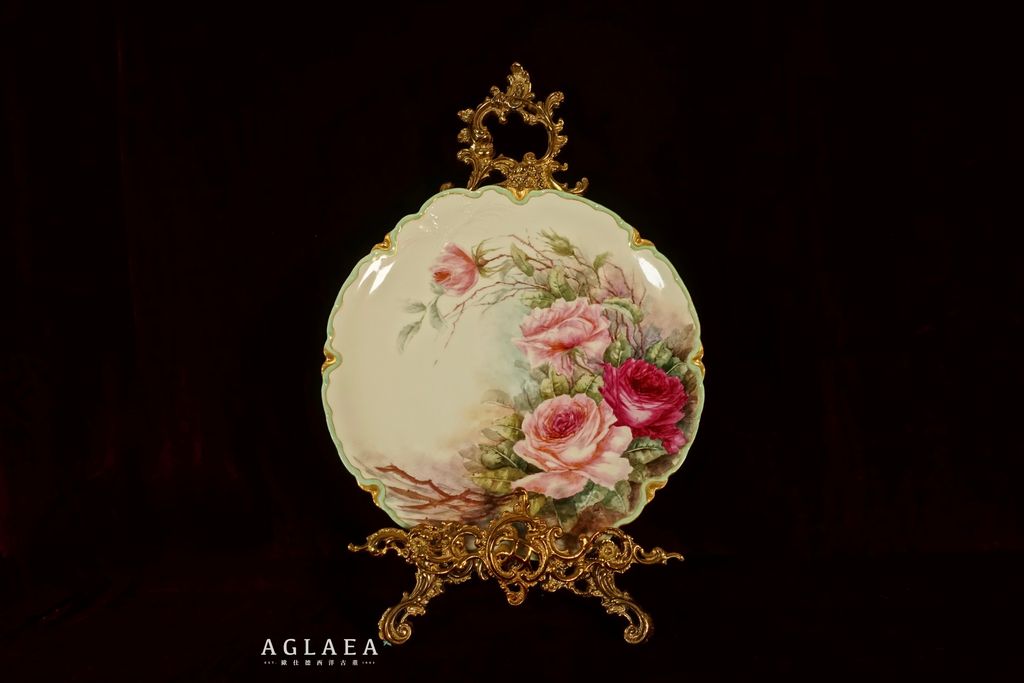
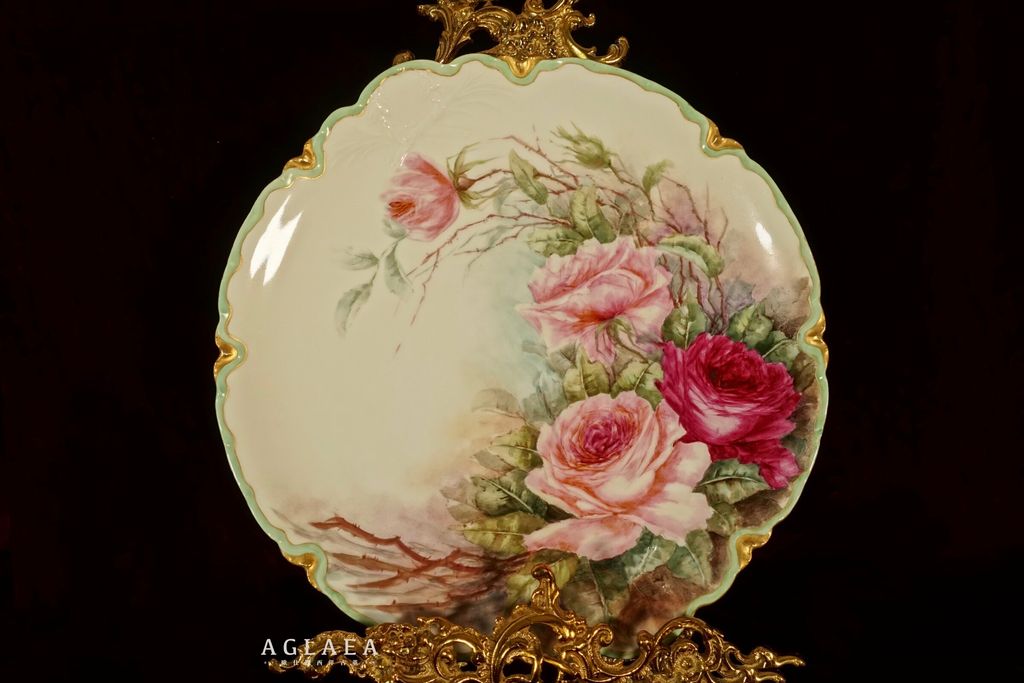
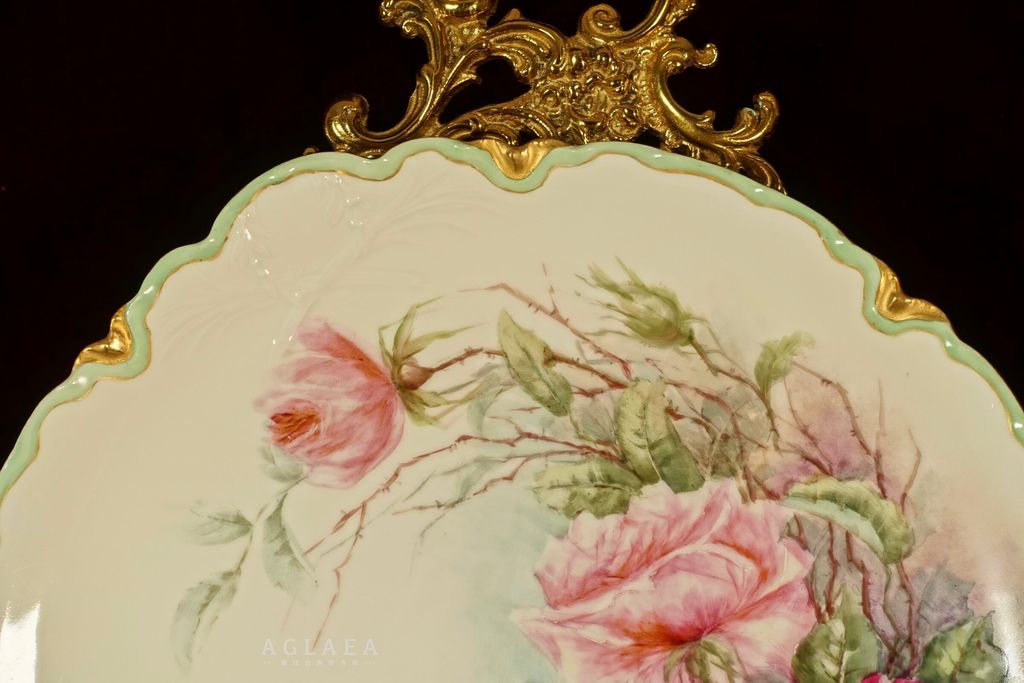
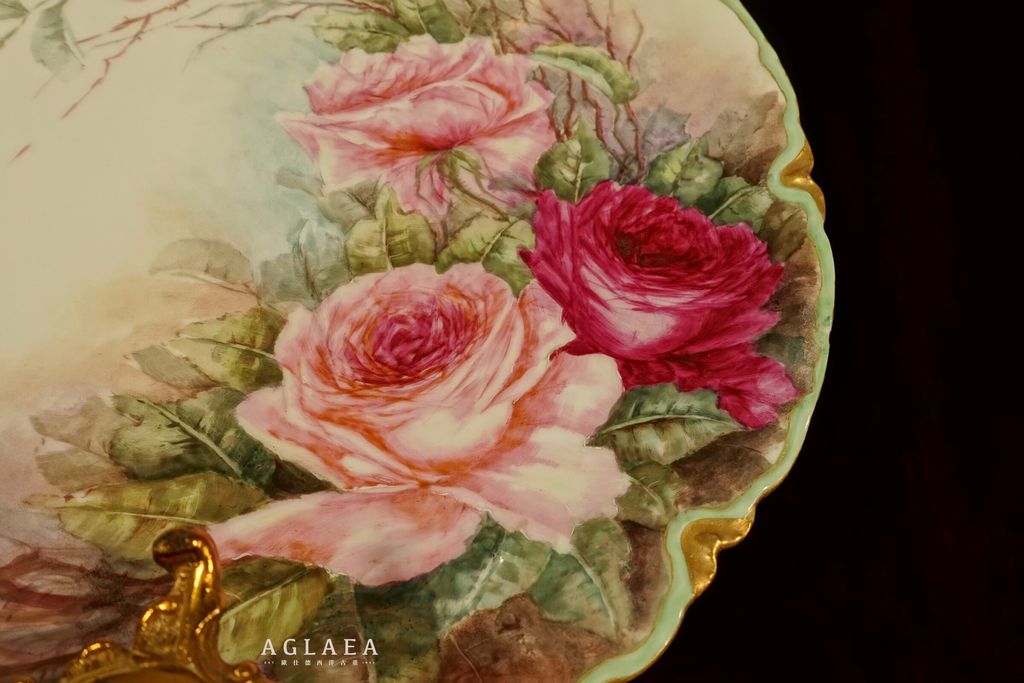
This hand-painted floral plate by Haviland reflects the 19th-century European appreciation for refined tableware— where function naturally extends into an expression of lifestyle and taste.
Founded by David Haviland, the manufactory established its production in Limoges, France, utilizing the region’s exceptional kaolin to achieve a porcelain body of remarkable whiteness and delicacy.
By the late 19th century, Haviland had secured a prominent position in fine porcelain, creating tableware for European and American high society, and appearing in distinguished settings such as the White House.
These pieces were not merely present on the table, but formed part of a broader cultivated way of living.
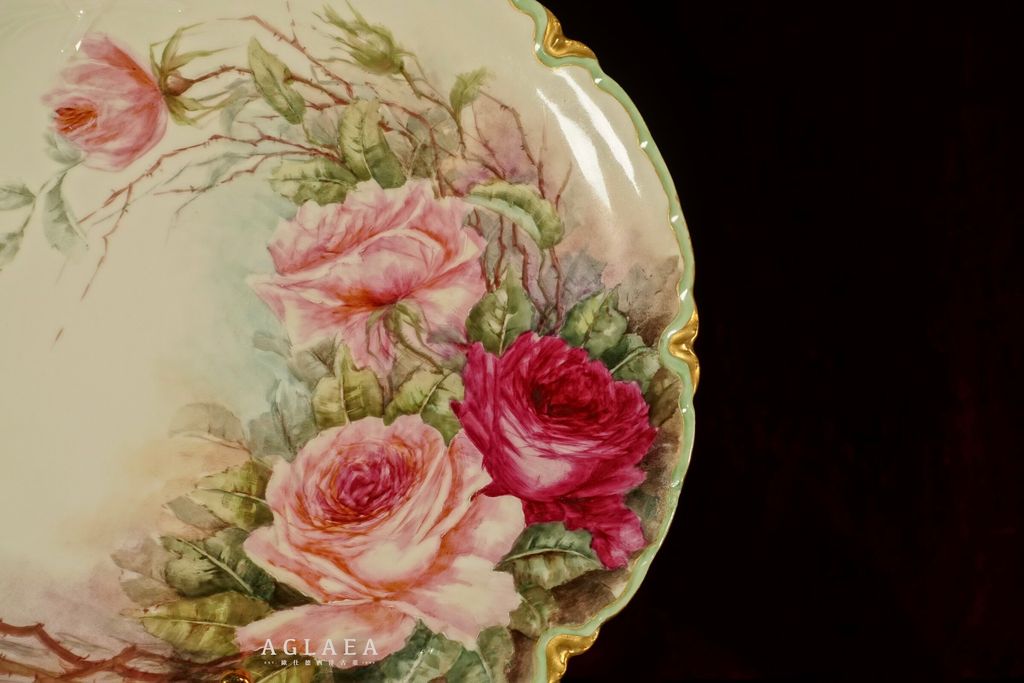
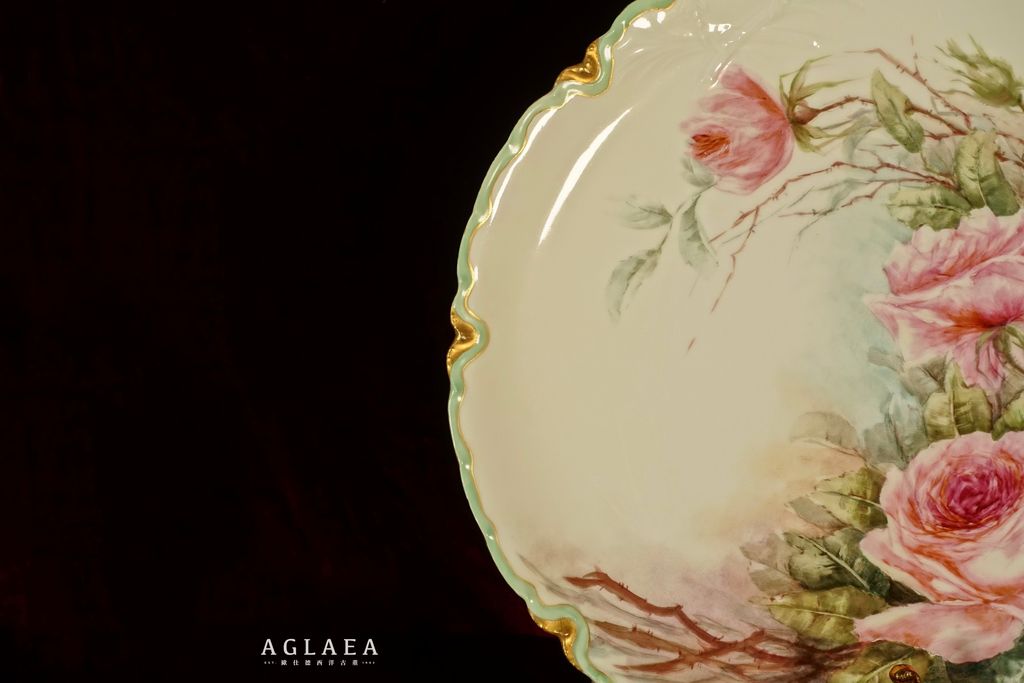
Hand-painted floral works from this period were typically executed by specialized artists, with each piece showing subtle variations in brushwork and tonal layering— preserving a level of individuality inherent to craftsmanship.
From the refined porcelain surface, to the soft, nuanced transitions of color, and the restrained pale green edging with gilded detailing, the piece carries a quiet sophistication that reveals itself over time.
The underside bears a clear Haviland mark, further anchoring its authenticity and collectible value.
More than a decorative floral subject, it reflects an era’s understanding of elegance in everyday life.
這件Haviland 的玫瑰花卉瓷盤,展現了 19 世紀歐洲對精緻瓷器的講究—— 不僅止於日常使用,也延伸為生活品味的一部分。
Haviland 由 David Haviland 創立,選擇於法國利摩日設廠,運用當地優質高嶺土燒製,使瓷質呈現細膩潔白、質地溫潤的特性。19世紀後期,Haviland 在精緻瓷器領域建立起穩固地位,長期為歐洲與美國上流社會打造餐瓷,並在如白宮等重要場合使用。
當時的手繪花卉,多由專職畫師完成,每一件在筆觸與色彩層次上皆看得見其細節。從瓷面的純淨細膩,到柔和而內斂的色彩過渡,再到盤緣鎏金描繪,整體呈現出靜謐雅緻的感受。